TL;DR
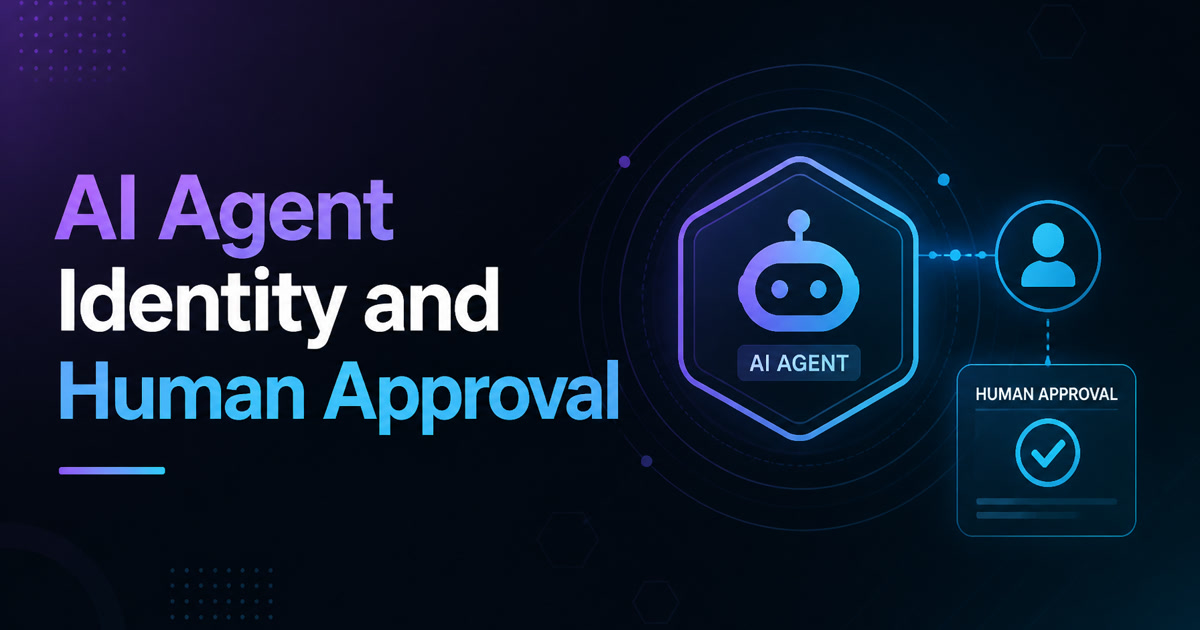
HYPR’s AgentPass places identity and policy checks between AI agents and the tools they use. Its November launch offers a useful case study in why granting an agent access is not the same as governing an action. The proposed controls are vendor claims, not independently measured security outcomes.
Introduction
An agent can prepare a useful change and still send it to the wrong person, modify the wrong repository or continue using credentials after its owner has left. The operational question is no longer just whether the model can reason. It is whether an organization can tell who authorized an action and stop it before an irreversible step.
On November 18, HYPR announced AgentPass, a control plane that ties agents to named human supervisors and checks requests against policy before execution. That architecture addresses an important gap, but its effectiveness depends on which tools actually pass through the control point. (Source : HYPR — AgentPass launch)
From borrowed credentials to delegated authority
A shared API key can tell a service that a request is authenticated without establishing which agent made it, which employee it represents or whether the action is appropriate. A log entry saying that a service account sent a message is not necessarily an answer to any of those questions.
HYPR says AgentPass binds each agent to a named supervisor and starts agents with zero access. According to the company, credentials stay in the gateway and are issued as short-lived tokens scoped to a single tool. Access follows the supervisor’s role, so offboarding cuts off the agent at its next request. These are descriptions of the design, not proof that every enterprise integration is protected. (Source : HYPR — AgentPass launch)
The distinction matters for procurement. A product may discover an agent on a device without controlling every tool that agent can reach. Coverage is a property of the actual integration, device enrollment, network routes and administrative configuration, not just an inventory count.
Approval must sit before the side effect
The product describes policies that can allow, block or hold requests for approval. HYPR gives the example of allowing an agent to draft an email while requiring a supervisor’s sign-off before sending it. It says high-risk actions can be approved using a FIDO2 passkey on a separate device. (Source : HYPR — AgentPass launch)
That boundary is more useful than asking a human to approve an entire loosely described task. An approval should expose the action, recipient and relevant scope. For a code change, a reviewer needs the proposed diff and target repository; for a transfer, the destination and amount matter. Approval fatigue is a real design constraint: gate every trivial read and people may stop inspecting requests, but allow a broad action and the gate loses meaning.
A policy engine outside the model can also reject a request regardless of how persuasively an injected instruction phrases it. That does not mean prompt injection is solved. The engine still needs correct context, complete coverage and rules that describe what is safe. A permitted action can be wrong even when the authorization check works exactly as designed.
What the kill switch does not do
HYPR says disabling an agent refuses its next request, including in running sessions. A separate account of the launch highlights the important corollary: blocking the next action does not undo an earlier one. (Source : Unite.AI — AgentPass and human accountability)
That distinction should change incident planning. A stop control limits future requests through the covered path; it is not a transaction rollback, a recall of an external email or a guarantee that an operation already in flight was cancelled. Teams still need audit trails, recipient-side remediation, backup and recovery procedures, and a way to rotate any credentials that escaped the intended boundary.
Buyers should ask for a demonstration that includes a long-running task, a policy change during execution and a request to an unsupported tool. The useful result is not simply that the dashboard shows an agent stopped. It is whether every relevant execution path honors the new decision, and what remains outside the product’s control.
Coverage is the hard part
The launch identifies enrolled Windows and macOS workstations as discovery targets and says administrators can route supported coding tools through the gateway. Discovery and enforcement are separate claims: seeing a local tool does not by itself establish that all of its network calls, sub-agents or remote jobs are governed. (Source : Unite.AI — AgentPass and human accountability)
This is consistent with the wider threat model in OWASP’s 2026 agentic security guidance, which identifies goal hijacking, tool misuse, identity and privilege abuse, and cascading failures as distinct risks. A permission check addresses part of that chain; it does not validate business truth or repair poisoned context. (Source : OWASP — Top 10 for Agentic Applications 2026)
For a pilot, measure the fraction of consequential actions actually routed through enforcement, the rate of escalations and the time required for a human decision. Those are proposed operational metrics, not benchmarks HYPR has published. Also record false approvals and blocked legitimate work; a control that nobody can operate is not an effective control.
FAQ
Does a named supervisor make an agent safe?
No. It improves accountability only if identity is accurate and authorization is enforced. The model can still make mistakes within its permitted scope.
Does stopping the agent reverse its previous actions?
No. The described kill switch blocks subsequent covered requests. Reversing a completed action requires separate remediation.
Are all discovered agents automatically controlled?
Not necessarily. HYPR distinguishes discovery on enrolled devices from routing supported tools through its gateway. Coverage must be verified for each deployment.
Is this an independent security assessment of AgentPass?
No. The architectural details come mainly from HYPR’s announcement. No independent penetration test or effectiveness benchmark was supplied in those sources.
Further Reading
- HYPR’s AgentPass announcement
- Unite.AI’s coverage of AgentPass
- OWASP Top 10 for Agentic Applications
— The Agent Report